

When bone loss makes dental implants impossible, bone grafting restores the volume and density your jaw needs — using the material best suited to your case.

A bone grafting procedure adds bone material to your jaw to rebuild the strength and volume needed for tooth restoration and dental implants.
When a tooth is lost, the bone beneath the gums begins to deteriorate. Traditional fillings or crowns can't reverse this, which is why many patients turn to dental implants — but your jawbone must be strong enough to support one. Bone grafting supplements the area with graft material, and over time, your body naturally grows new bone tissue around it, strengthening the site until it's ready for implant placement.
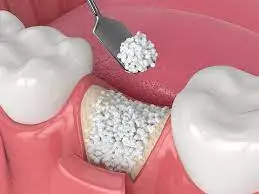
A visual look at how graft material rebuilds bone volume around an implant site.
Material is packed into the socket or defect area where bone has been lost.
Over several months, your body's own bone cells grow into and replace the graft material.
Your dentist will recommend the material best suited to your bone volume, health history, and treatment goals.
Bone harvested from your own body — typically the chin, back of the jaw, or hip. Provides live bone cells and integrates well with the graft site.
Gold StandardProcessed donor bone from a human tissue bank, carefully sterilized to eliminate disease transmission risk. Avoids a second surgical site.
Frequently UsedProcessed bone from an animal source, typically bovine, sterilized and used as a scaffold for new bone growth.
Frequently UsedBiocompatible materials like calcium phosphate or hydroxyapatite that mimic natural bone composition and encourage regrowth.
Case-SpecificRegenerates lost or damaged bone, filling defects and voids left by tooth loss or trauma.
Creates the stable foundation dental implants need for long-term success and durability.
Helps restore your bite, facial structure, and confidence in your smile.
Need a graft specifically near your upper back teeth and sinus area? That's typically handled as a sinus lift — a related but distinct procedure. Ask us which applies to your case.
Bone grafting is a procedure that adds bone material to the jaw to rebuild volume and density lost due to missing teeth, periodontal disease, or trauma. This creates a stable foundation to support future dental implants.
At Dr G Dental Studio, bone grafting is $650 per site. Your exact treatment plan is confirmed after a clinical exam and imaging.
There are four main types: autograft (bone from your own body, typically the chin, jaw, or hip), allograft (processed donor bone from a human tissue bank), xenograft (processed bone from an animal source, typically bovine), and synthetic grafts made from biocompatible materials like calcium phosphate or hydroxyapatite. Your dentist will recommend the option best suited to your case.
The procedure is performed under local anesthesia, so you shouldn't feel pain during the graft. Mild swelling and soreness are common for several days afterward and are typically managed with medication.
Healing time before an implant can be placed typically ranges from 3 to 9 months, depending on the graft size, material used, and your body's healing response.
Not exactly. A sinus lift is a specific type of bone graft performed only in the upper back jaw near the sinus cavity. Bone grafting is a broader term covering procedures to rebuild bone volume anywhere in the jaw. Your dentist will determine which type applies to your situation.

Schedule a consultation and imaging to see what your jawbone needs to support a successful implant — $650 per site.