

A sinus lift adds bone to your upper jaw in the area of your molars and premolars, so there is enough bone to support a dental implant.

A sinus lift is a surgical procedure that adds bone to your upper jaw in the area of your molars and premolars. It is performed when there is not enough bone in the jaw area to support a dental implant, and the patient has suffered from bone loss due to tooth loss, periodontal disease, congenitally missing teeth, and trauma to the mouth.
Learn more about sinus lifts. Contact Dr. G Dental Studio at 2500 SW 107th Ave #45, Miami, 33165, or call (305) 217-6453.
Your sinuses are on either side of your nose and above your mouth. When you lose teeth, the bone in that area starts to deteriorate or shrink. This often causes a pocket to develop underneath the root of your tooth, which can lead to tooth loss.
At Dr. G Dental Studio, we perform a sinus lift to build up the bone in this area to prevent bone loss and a resulting tooth root infection. Bone loss in this area can typically be corrected with a dental implant, but before the implants can be placed, the sinus floor must be raised so that the dental implants have adequate room to be implanted.
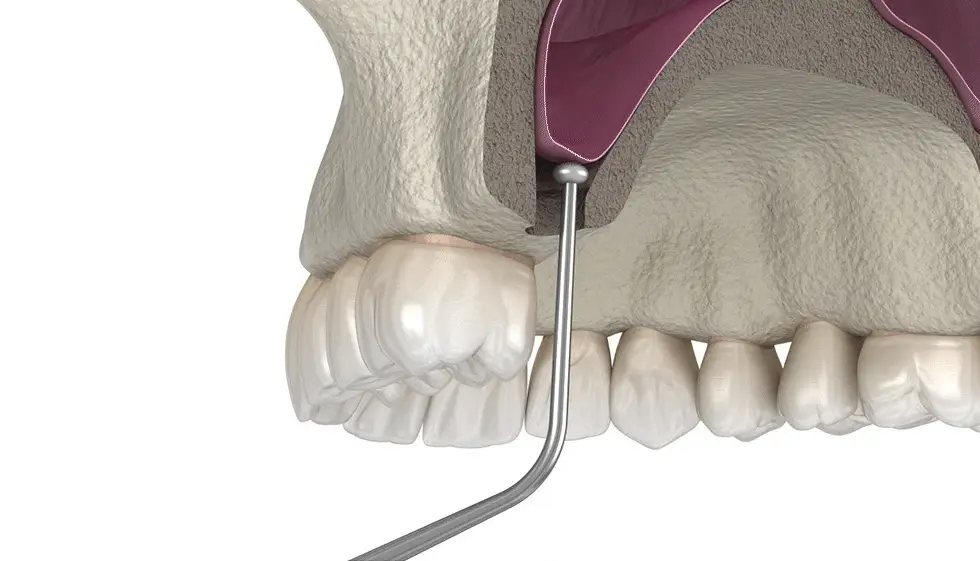
A sinus lift or sinus augmentation procedure involves grafting bone from the patient’s hip into the upper jaw. The bone graft is inserted between the upper jaw and the maxillary sinuses, the hollow cavities on either side of the nose. Once the graft is in place, it will fuse with the existing bone to create a stable structure firm enough to support dental implants.
After the procedure, patients can expect to experience some pain and swelling for the first few days after the procedure. Patients will need to eat soft foods while the healing process is taking place. They must follow all care instructions given to them by their dentist during the recovery period.
Sinus lift allows for the successful placement of dental implants in the posterior maxilla, where the bone height is insufficient due to the proximity of the maxillary sinus. By increasing the bone height, a sinus lift creates a stable foundation for the placement of dental implants, enhancing their longevity and success rate.
Dental implants supported by a sinus lift can significantly impact an individual’s self-confidence and self-esteem. With a complete and natural-looking smile, patients feel more comfortable and confident in social interactions and professional settings.
Sinus lift facilitates the placement of dental implants, which can restore proper chewing function and improve speech. With dental implants securely anchored in the augmented bone, patients can regain the ability to bite and chew comfortably, enhancing their quality of life.
When patients are a good candidate for a sinus lift, they can look forward to having their dental implants placed securely in their upper jaw to have a complete set of teeth that look great and function well.

Contact Dr. G Dental Studio at 2500 SW 107th Ave #45, Miami, 33165, or call (305) 217-6453 to learn more.